
The Ultimate Guide to Blue Light Reading Glasses: How BluLite Lenses Protect Against Digital Eye Strain
Discover how blue light reading glasses combat digital eye strain. Learn why combining magnification with blue light filtration is essential for screen users.
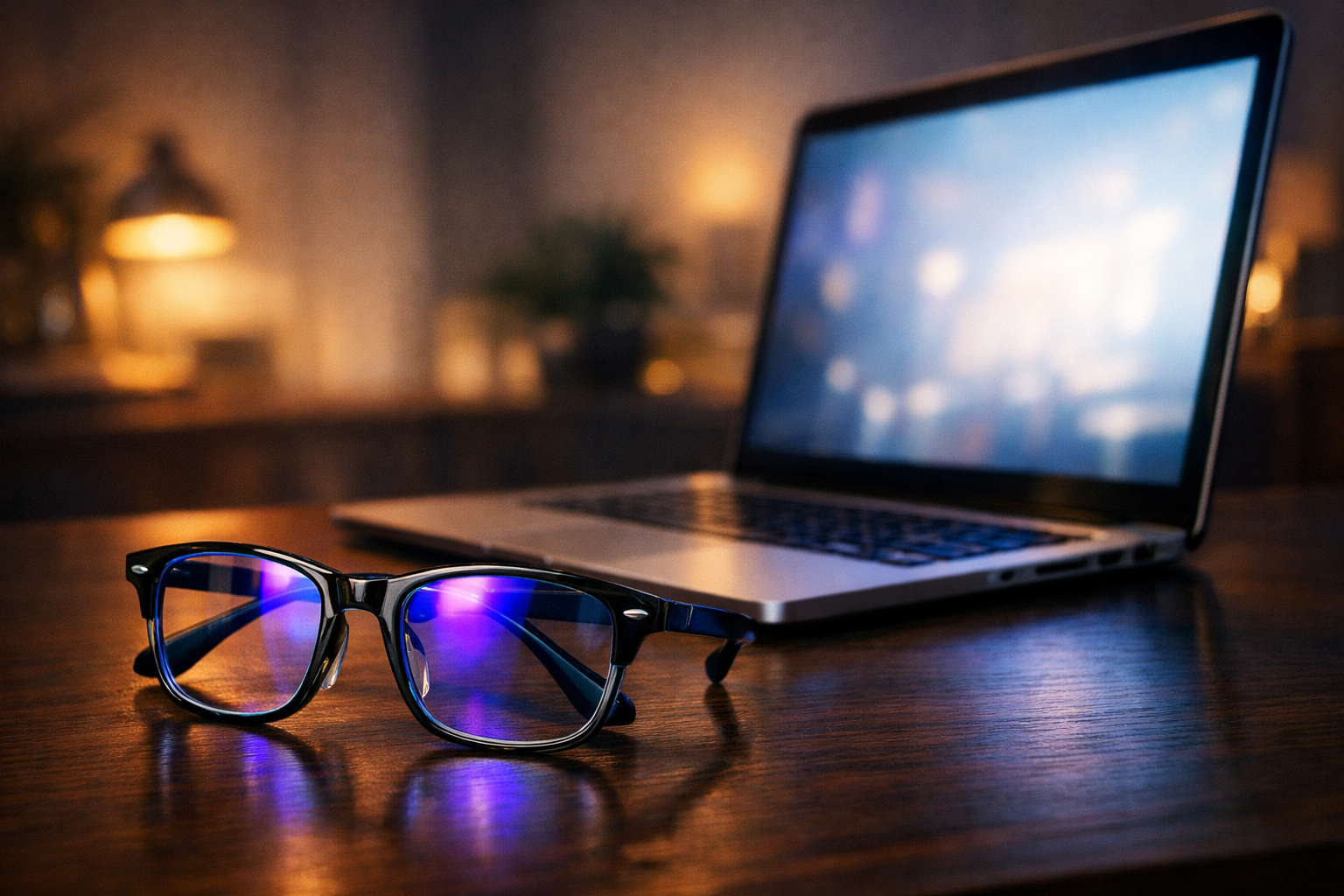
As screen use reaches historical highs in 2026, digital eye strain (DES)—also known as Computer Vision Syndrome (CVS)—and circadian sleep disruption have become dominant public health concerns. Global adults currently average 6 hours and 40 minutes of screen time daily, with 69% of individuals reporting symptoms of visual fatigue, according to the Eyesafe World Screen Health Report 2026. While standard non-prescription blue light glasses have surged in popularity, recent clinical evidence demonstrates that filtering blue light alone does not resolve the physical muscle aching associated with near-work screen fatigue. For adults dealing with intermediate-distance focus fatigue or presbyopia, high-quality blue light reading glasses are the scientifically backed solution.
What Are Blue Light Reading Glasses?
Blue light reading glasses integrate active optical magnification (+0.50D to +3.50D) with high-energy visible (HEV) filtering coatings. While standard non-prescription (plano) lenses only filter light scatter, adding optical magnification directly reduces ciliary muscle fatigue by adjusting the eye's focal point for intermediate screen distances (typically 18 to 24 inches away).
Combining high-quality blue light filtration with optical magnification changes the equation entirely. As highlighted in a comprehensive Educational Analysis by SCOJO New York, this dual-action mechanism simultaneously relaxes the ciliary muscles and filters harsh HEV glare, providing comprehensive relief from digital eye strain.
How High-Energy Visible (HEV) Blue Light Affects the Eyes
High-Energy Visible (HEV) blue light occupies the short-wavelength band of the visible spectrum between 380 nm and 500 nm. Modern devices, including smartphones, laptops, and LED monitors, emit a sharp spectral peak near 455 nm, which scatters easily in ocular media and creates chromatic aberration and visual glare (Molecular Vision Study).
The Dual Causes of Digital Eye Strain
Digital eye strain is driven by two distinct physiological factors that occur simultaneously during prolonged screen use:
Ocular Surface Evaporation (Dryness): Human baseline blinking occurs approximately 15 times per minute. When viewing digital displays, this blink rate decreases by 50% to 66% (falling to just 5–7 blinks per minute), causing accelerated tear film evaporation and burning sensations, according to the American Academy of Ophthalmology.
Ciliary Accommodation Fatigue: Staring at intermediate screen distances forces the ciliary body muscles surrounding the crystalline lens to remain continuously contracted. For those over 40 experiencing presbyopia, this sustained contraction leads to eye ache, brow pain, and transient blurred distance vision.
Melatonin Suppression and Sleep Disruption
Clinical studies published in 2025 and 2026 demonstrate that exposure to 460–480 nm blue light suppresses pineal melatonin secretion via specialized retinal cells called ipRGCs. Because this specific wavelength mimics daylight, evening screen use directly disrupts the body's natural circadian rhythm.
A 2026 study in the Tohoku Journal of Experimental Medicine confirmed that wearing blue light-filtering eyewear during evening screen use significantly attenuates light-induced melatonin suppression. Furthermore, a massive cross-sectional analysis in JAMA Network Open (2025) involving over 120,000 adults linked late-night screen exposure directly to extended sleep onset latency (taking longer to fall asleep) and reduced overall sleep duration.
Why Magnification + Blue Light Filtering Is Essential
A common misconception is that standard zero-power glasses will stop eyes from feeling tired. However, major clinical reviews, including the Cochrane Systematic Review and research in the Journal of Optometry (2025), confirm that plano blue-light filtering alone does not significantly reduce physical ciliary fatigue.
Digital eye strain is primarily a mechanical, accommodative issue. To gain true physical relief, blue light filtering lenses should be paired with the appropriate optical reading power. The magnification relieves ciliary muscle strain, while anti-reflective (AR) and blue light coatings reduce screen flicker and bounce-back glare.
Introducing SCOJO New York’s BluLite™ Lens Technology
For consumers seeking optimal screen protection without sacrificing style or visual clarity, SCOJO New York represents the industry benchmark in premium eyewear. As a leader in luxury, ready-to-wear reading glasses, SCOJO New York’s proprietary BluLite™ technology is engineered to prescription standards.
BluLite™ technology combines optical-grade lens clarity, scratch-resistant anti-reflective coatings, and targeted HEV blue light filtration in the 380–450 nm spectrum. This targeted absorption filters out the most damaging wavelengths emitted by screens while preserving true color fidelity.
Premium Frame Collections
SCOJO New York incorporates its BluLite™ lenses across two distinct, high-performance frame collections:
The Gels BluLite™ Collection: Crafted from ultra-lightweight, flexible TR-90 resin, these frames are engineered for all-day comfort during long desk sessions. Notable styles include the iconic rimless Gels Original BluLite and the sleek, modern Courier BluLite.
The Handmade Collection: For wearers seeking artisanal design, this collection features handcrafted custom acetates and fine metals. Styles like Bleeker Street and Bond Street take inspiration from iconic Manhattan thoroughfares, delivering architectural structure with high optical performance.
To ensure consumer confidence, all SCOJO New York eyewear is backed by a 12-month factory warranty guarding against manufacturing defects, alongside a 30-day money-back guarantee with free U.S. returns.
How to Choose the Right Blue Light Eyewear
When selecting protective reading eyewear for digital use, follow these practical guidelines to ensure maximum visual comfort and optical efficacy:
Verify Your Diopter Strength: Screen viewing usually occurs slightly further away (18–24 inches) than traditional book reading (12–16 inches). You may need a diopter strength slightly lower (by about +0.50D) than your standard reading prescription. Utilizing tools like the online SCOJO Power Chart can help identify your ideal strength.
Look for Integrated Anti-Reflective Coatings: A blue light filter alone is insufficient if the lens suffers from glare. Ensure the lenses have a premium AR coating to stop light bounce-back from overhead office lighting and windows.
Prioritize Optical-Grade Materials: Avoid cheap, stamped plastics that introduce visual distortion. Opt for optical-grade acrylic or polycarbonate lenses that offer edge-to-edge clarity.
Consider Frame Weight: Since screen glasses are often worn for 6 to 8 hours daily, lightweight frame materials like TR-90 resin provide significant ergonomic benefits by reducing pressure on the nasal bridge and temples.
Conclusion
As digital screen dependency continues to expand in 2026, protecting visual health requires more than just trying to limit screen time. By combining optical magnification with targeted HEV filtration, high-quality blue light reading glasses address both the muscular strain and photobiological disruption caused by modern displays. Investing in premium blue light glasses enhances daily visual comfort and productivity while supporting healthy circadian rhythms and sleep quality.